Monday, October 16, 2017

THREE SUPPLY CHAINS AND WASTE

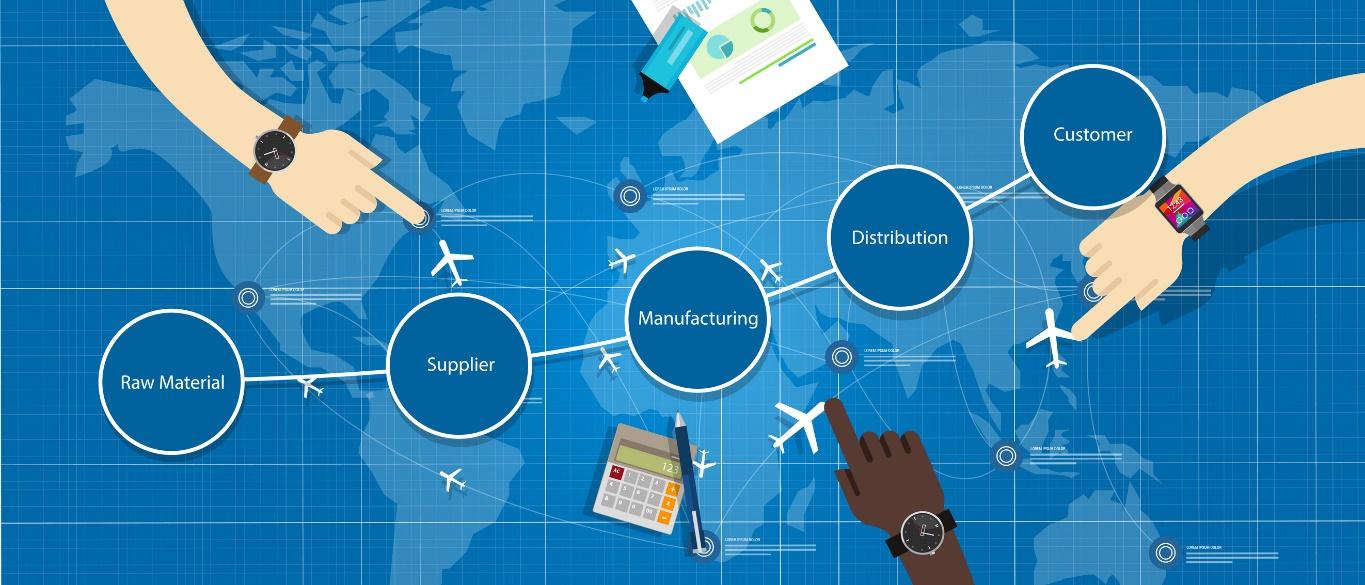
Until the three Supply Chains of product, finance, and data/tech are completely integrated, there will be gaps and redundancies, aka, waste.


JERRY RIG SUPPLY CHAINS

Many manufacturers and retailers jerry rig their supply chains instead of transforming for e-commerce and meeting customer expectations.


Thursday, October 12, 2017

E-COMMERCE AND THE LAST MILE

Manufacturers and retailers that over obsess on e-commerce logistics costs, such as last mile, do not have the supply chains to meet customer expectations.


Risks and Benefits to Expect when Outsourcing Supply Chain Management

This is a guest blog and is written by Catherine Park.  It is very good.

Supply Chain Management Outsourcing: The Good and the Bad
Supply Chain Management (SCM) is a time-consuming task that comes with a lot of responsibilities. Since some of the companies want to devote their asset and resources to the core business process, they decide to outsource their SCM to an organization that specializes in outsourcing management services.
This practice has its bad and good sides. If you want to discover what these are, we have put together the good and the bad of SCM outsourcing.
The Good
As you will see in the next section of the article, outsourcing bears certain risks, but there are also many benefits you will be able to reap from this practice, especially if you join forces with a reliable partner with experience in outsourcing management services.
Invest in Achieving Long-Term Success
As we already stated, SCM can consume many resources, assets and hours of your workforce. When outsourcing it, you can use all of these to focus on the most important aspects of your business. You can leverage this new situation to your advantage to improve products and/or services, marketing or customer support department. All of these will help you to achieve success in the long run.
Cut Down Expenses
SCM will require you to hire more managers. Having experienced professionals on the payroll will cost your organization more money. By outsourcing, you will tap into otherwise unreachable resources of your new outsourcing partner. They will optimize SCM processes so that you get the most out of your investment.
Increased Flexibility and Agility
When outsourcing something such as SCM to a partner, you will be able to experience flexibility like never before. You will be able to build an infrastructure with the help of your outsourcing partner. The flexibility comes from the ability to change something in your infrastructure as the market shifts. With extra resources, you will be able to respond to new market demands very quickly in order to ensure success.
Build Brand Equity
Supplying your customers with products in time is any organization's priority. When you are limited by resources, you won’t be able to meet the increased demand as your resources are spread thin. However, when you outsource SCM, your partner is responsible for estimating the demand and make sure that all customers get what they want and when they want it. By building brand equity, you will set your business on the course for growth and prosperity.
The Bad
Here are some downsides of outsourcing SCM one should be aware of. Knowing these downsides can help you to create strategies that will allow you to prevent or lower their impact on your business processes.
Decreased Quality
If your outsourcing partner is not experienced enough, you can expect the quality of your products to drop to a lower rate. This is why you have to make sure that your new partner doesn’t cut corners. Make sure to check their quality assurance policies before you sign that contract.


Hidden Fees
You should get your company ready for hidden fees that might await you along the road. Cost projections are not always 100% accurate and you should specify actions to be taken if this is the case in the contract with a third party you are outsourcing SCM to.
Integration and Setbacks
Since SCM consists of complex operations, you should get ready to experience minor setbacks during the first period of integration. Make sure to establish good communication with your new partner so that you can solve this quickly.
SCM is a business process definitely viable for outsourcing. We can advise you to do research on your partner before you outsource this valuable process to them.


Wednesday, October 11, 2017

BLOCKCHAIN, DIGITALIZATION, GLOBAL TRADE

For global trade and global supply chains, blockchain and digitalization do not address the processes. Reality check.


FORWARDERS--WAKE UP, IT IS THE 21ST CENTURY

Forwarders warned: 'It's the 21st century, step up or lose out'

baku oil
© David Massie
Forwarders must step up to the plate and embrace digitisation if air cargo is to move forward, according to a major shipper.
At the Caspian Air Cargo Summit in Baku this week, Kenny Le Tissier, Halliburton’s logistics manager for Europe, Eurasia, and Sub-Saharan Africa, called on forwarders to drag the industry into the new century.
“When it comes to digitisation and airfreight, there is a reluctance to move forward, but this is an aspect of business that needs to be properly embraced,” said Mr Le Tissier.
“Forwarders must step up here – there are things shippers expect of their forwarders that they can only provide with technology, and known-shippers, especially, have these expectations.”
Beyond digitisation, Mr Le Tissier added, forwarders should aim for “realistic” multimodal solutions and move “outside their narrow verticals”.
“We find they frequently stay within the verticals in which they work, and rarely look beyond,” he said. “This is especially true in places like Central Asia or Africa.”
With reports circulating that airlines are looking to bypass the forwarder model and engage shippers directly, Mr Le Tissier assured forwarders this wasn’t necessarily a view he shared.
“We certainly want direct contact with the carriers; sometimes, going through a forwarder, the comments and requests from shippers to airlines are watered down,” he continued.
“This does not mean we want the forwarders gone though, there are things they provide that the carriers couldn’t. But it’s good for the airlines to know what our needs are.”
Mr Le Tissier did, however, warn some forwarders that they were threatening their livelihoods by a “transactional” approach to business.
“There are cases where forwarders get the shipments into the transport chain and then forget about them; until it comes to the end of the month and they want to bill for them,” he sai.
“Shippers want to know their shipments are considered by the forwarders as unique – which they are.”

Tuesday, October 10, 2017

LOGISTICS, COMMODITY SERVICE, VALUE

How does a logistics provider in an industry viewed as a commodity service actually create value?


LOGISTICS BEING AMAZONED

How much is the logistics industry and the various types of providers being Amazoned, directly and indirectly? And what are they doing about it?


Monday, October 9, 2017

IS THERE A RETAIL APOCALYPSE?

Is their a retail apocalypse or a forced awakening from complacent commoditization? Same with their supply chains?


MOVING FORWARD AT DHL GLOBAL FORWARDING???

Analysis: the key to 'eyesore' DGF's problems is how it is managed

dhlgf
While some parts of Deutsche Post-DHL continue to secure big wins that testify to the reach of the German behemoth, one of its flagship divisions, DHL Global Forwarding (DGF), remains an eyesore in its vast asset portfolio.
In particular, it is truly astonishing that DGF did not manage to buck the trend of declining cash flows in the first half of this year, despite a buoyant market for air and sea freight operators – not to mention its sales performance, based on trailing records.
DGF remains the world leader in air freight, both in terms of tonnes and revenues, and I believe its problems go to heart of the way many freight forwarders are managed, regardless of their size.
Woes, share price and loss leader
Freight forwarding woes for DP-DHL persist at a time when financial analysts are banging their heads against the wall to come up with fair value estimates for its stock, which currently trades at a record high of almost €38, having risen about 10% since its interim trading update was released on 8 August.
DP-DHL share price (source Yahoo Finance)
Freight forwarding activities did little, if anything, to contribute to that surge and, more broadly, it is evident that other units have contributed far more to shore up its valuation on the stock market since the credit crisis in 2008.
DP-DHL long-term share price (source Yahoo Finance)
One of several examples in logistics of a share trading well above consensus estimates from analysts, DP-DHL has proved wrong many observers – including me who thought value creation needed a different narrative, let alone a different corporate strategy, since its shares traded in the low €30s at the turn of the year. To a different extent, the shares of Kuehne + Nagel, Panalpina, DSV, Expeditors and CH Robinson all trade at a premium against analysts’ consensus estimates, which for DGF are shown in the table below.
DP-DHL consensus estimates vs share price from Thomson Reuters (source: 4-traders.com)
Out of kilter
Earlier in May, I wondered whether DGF was out of tune, or just out of time, and once again it captured my attention a couple of months later following the release of financial details that were extremely disappointing in terms of cash flow generation, leading me to the conclusion that management might have accepted it as a loss leader among the group’s diverse and vast portfolio of assets.
In fairness, the performances of other divisions would justify such an approach, but either way, is there a quick fix? And is there anything that needs fixing?
Ebit per unit (source DP-DHL interim results)
After all, the bulls can point out that revenues rose strongly on the back of more favourable trading conditions in the first half, surging 6% year-on-year, which is broadly in line with the rise it recorded between 2014 and 2015, but that would a rather short-sighted take.
In fact, the first half of 2016 was particularly bad, so half-year revenues in 2017 looked better than they actually were, still well below prior years’ levels.
Here are half-year numbers, which show revenues of €7.1bn…
(I’ll joyfully talk about 1H 2011-2017 cash flows later, so cast your impatience aside and admire the bit highlighted at the bottom of the tables that follow, while paying more attention to its top-line performance.)
DGF snapshot (source DP-DHL interim results 2017)
…while between 2014 and 2015 its top-line ranged between €7.1bn and €7.5bn…
DGF snapshot (source DP-DHL interim results 2015)
… and again between 2012 and 2013 sale were well above the €7bn mark, so…
DGF snapshot (source DP-DHL interim results 2013)
…we have to go back to 2010 to find a performance that was worse than the first-half this year.
DGF snapshot (source DP-DHL interim results 2011)
Fingers crossed
One problem is that markedly higher freight rates do not necessarily convert immediately into higher revenues, because clients are locked in long-term contracts. Another issue at group level and by unit is the strength of its reporting currency, the euro, which has rallied hard against the US dollar and other major currencies since the end of 2016.
“Deutsche Post DHL Group increased its consolidated revenue by €1,634m in the first half of 2017 to €29,696m,” it said in its interim release. But “negative currency effects reduced the figure by €178m. 70.0% of consolidated revenue was generated abroad (previous year: 68.7%).”
DGF’s operating profitability fell significantly, and the damage was visible at cash flow level.
In the first half of 2017, it burned €100m in operating cash flow (OCF) and was deeper in the red after reporting €64m negative operating cash flow one year earlier. This is its worst first half-year performance in almost a decade.
Trends markedly deteriorated since €35m of negative OCF was recorded in 2015, which was only a minor improvement against one year earlier.
Freight forwarding activities have not returned to significantly higher normalised cash flows, despite some changes in the management team – which raises the question as to whether DGF is executing based on poor internal due diligence processes, which ultimately concerns and affects corporate governance procedures, and vice versa – internal due diligence affects corporate governance risk, while corporate governance rules also affect/determine efficient internal due diligence processes.
Standards
I have discussed this topic with industry executives recently and, unsurprisingly, DGF has a problem with its reputation within the freight forwarding industry, it seems. Surely the appointment of a highly skilled executive such as Tim Scharwath, who joined the DP-DHL board this summer, could help, but is not a panacea because he is not exactly a finance guy.
When I discussed financial performances and fundamentals as well as internal reporting duties with the chief financial officer of a tiny European forwarder, he kindly reminded me that: “We are much smaller than others but ours are the standards. Have you seen the internal reporting stuff of DGF? I have them in my drawer – they are dreadful.”
Others I recently talked to added that these results not only reflected a lack of efficient internal procedures at DGF, but across the entire industry “only a few players shine, trust me”, one DGF rival in air freight admitted.
On this matter, the chief executive of a public company that ranks in the top five by size, recently confirmed in a private conversation that internal due diligence standards and processes “are generally weak in the industry, and you have to accept that”.
“And DGF is no different,” he concluded.
This comes as many players are not looking to sell the traditional freight forwarding business proposition anymore, I am told, but rather end-to-end solutions boasting a new technology slant, while bringing a consultancy element to their offering to shippers.
If that sounds too good to be true, it is because it probably is. One senior consultant in logistics said “this is a story I’ve heard, too, but with the margin pressure we have witnessed and are witnessing (…) it is just like scraping the bottom of the barrel to find something new to sell to the shippers (…), something that is simply not there in first place”.
As far as I am concerned, I do not know how a consultancy business with underlying operating margins of between 3% and 7% could ever be considered by stakeholders as a sound proposition, but I would be glad to be proved wrong.
In all this, while most of my industry sources are now expecting third- and fourth-quarter numbers to be much stronger than first-half figures, and not only for DGF, my final consideration is that certain problems are more deeply rooted in the industry than I thought initially. And until they are not addressed, the sword of Damocles will continue to swing over many executives’ heads in the finance departments of smaller as well as larger forwarders.

Sunday, October 8, 2017

IN OMNICHANNEL, WHERE ARE RETAILERS AND MANUFACTURERS FOCUSED?

Are too many retailers and manufacturers focused more on what was and not on what will be in omnichannel?  It shows with their supply chains.


E-COMMERCE CUSTOMER EXPECTATIONS

If your e-commerce supply chain cannot satisfy customer expectations, what are you doing online?  Think about it.


Thursday, October 5, 2017

E-COMMERCE AND SUPPLY CHAIN VELOCITY

E-commerce supply chain management is defined by its velocity to meet customer expectations.  How fast is your supply chain?   SCM


BLOCKCHAIN AND SMART SUPPLY CHAINS

Guest blog: how blockchain can strengthen supply chain links

dreamstime_s_91888455
© Aleutie
Blockchain – the technology behind digital asset and payment system Bitcoin – is being mooted as the next big thing for supply chains.
But how can this fledgling technology be used to benefit logistics and the greater supply chain? The answer lies in its potential to speed up administrative processes and to take costs out of the system while still guaranteeing the security of transactions.
The underlying principle of blockchain is to provide a secure environment where encrypted business transactions between buyer and seller can happen without the need for third parties to intervene. This means that it could be a game-changer for supply chains.
Blockchain is essentially a trustworthy digital ledger that nobody can change, but anybody in a system can update. When they do, it is time-stamped and everybody in the system gets included in the update. Only one update can be made at a time, with each update to the ledger forming a ‘block’, and cumulative updates creating a chain of blocks – hence the term: ‘Blockchain’.
This distributed system operates over a network via the Internet. Individuals in the network keep copies of the blockchain on their personal computers and move the information, or a payment, on digitally by validating the transaction.
All the participants with a copy agree the state of the blockchain at any given time. It is this consensus and the use of cryptography (storing and transmitting data in a particular form so that only those for whom it is intended can read and process it) that ensures records can’t be counterfeited or altered, giving Blockchain its high security.
An increasingly pertinent advantage of blockchain technology is to repel cyber attacks and forced outages. Hackers would not only need to hack into a specific block to alter existing information but would have to access all the preceding blocks going back through the entire history of that blockchain, across every ledger in the network, simultaneously. And with no central organisation owning the system it is difficult to corrupt and everybody can use it and help run it.
What’s in it for Supply Chain?
The advantages of better data sharing across the supply chain would allow for:
  • faster and more accurate tracking of products and distribution assets – for example containers, as they move through the supply chain
  • a reduction of errors on orders, goods receipts, invoices and other trade related documents due to less need for manual reconciliation
  • sharing of information about process improvements and maintenance in real-time
  • a permanent audit trail of every product movement or financial transaction from its source to ultimate destination, reducing opportunities for fraud.
Accredited users in a specific supply chain would be able to access specific blocks of data in the system, either to view or transact. While still early days, take-up will accelerate as the possible applications become better understood.
Blockchain can be used to create ’smart’ contracts that execute the terms of any agreement when specified conditions are met. The “smart” part is a piece of computer code that predefines a set of rules under which the parties to that smart contract agree to interact with each other. The code facilitates, verifies, and enforces the performance of contract conditions.
In a retailer-supplier relationship, for example, it is possible to route purchase orders, invoices, receipts, shipping notifications, inventory data and other trade related documents to be automatically matched and verified. Payments and replenishment orders can be triggered automatically, based on the codified rules within a smart contract. There are obvious cost-saving opportunities in administratively heavy industries such as aviation and marine shipping.
Supply chain pioneers
Early adopters are pioneering supply chain blockchain applications in a number of industries. With the opening of the Walmart Food Safety Collaboration Center in Beijing, IBM, Walmart and Tsinghua University are collaborating to improve the way food is tracked, transported and sold to consumers across China. They are looking to harness blockchain technology to generate transparency and efficiency in supply chain record-keeping, with the aim of enhanced food safety for Chinese consumers.
With blockchain, food products can be digitally tracked from an ecosystem of suppliers to store shelves and ultimately to consumers. The information captured in each transaction is agreed upon by all members of the business network; once there is a consensus, it becomes a permanent record that can’t be altered. This helps assure that all information about the item is accurate.
The record created by the blockchain can also help retailers better manage the shelf-life of products in individual stores, and further strengthen safeguards related to food authenticity.
IBM, along with global transport and logistics company Maersk, is building a blockchain solution that will be made available to the shipping and logistics industry. The solution will help manage and track the paper trail of tens of millions of shipping containers across the world by digitising the supply chain process from end-to-end to enhance transparency and the highly secure sharing of information among trading partners. Maersk found in 2014 that just a simple shipment of refrigerated goods from East Africa to Europe can go through nearly 30 people and organisations, including more than 200 different interactions and communications among them. When adopted at scale, the blockchain solution has the potential to reduce complexity and save the industry billions of dollars.
In another logistics application ABN Amro, Delft University, the Port of Rotterdam and over a dozen other partners are joining forces to launch a large-scale project. Over the next two years, the partners in the TKI Dinalog project will be designing, developing, and implementing a new information infrastructure. This will be rooted in blockchain technology to connect operational information, financial flows and contracts.
It is early days and there are some challenges. There is a need to convince all involved parties to join a particular blockchain and collaborate for mutual benefit. Without this, it won’t work well. Business leaders will need to be open to sharing information with their tier 1 suppliers and others deeper in the supply chain. The old-age question ‘what’s in it for me?’ will need an answer before everyone is confident to share everything in these private ledgers.
Other hurdles are a lack of regulatory framework or standards; the cost of adapting legacy systems to blockchain; working out who pays for transaction process; and adopting a new mindset around a decentralised network with no central control.
These are all hurdles that can be addressed and blockchain remains a more powerful and broader concept than other bleeding edge technologies such as the Internet of Things. Ultimately, blockchain technology could help create more transparent and less vulnerable supply chains.
This is guest post by Gavin Parnell, director of Go Supply Chain.

AMAZON TESTING OWN DELIVERY SERVICE TO RIVAL FEDEX AND UPS

Amazon continues to take control of its supply chain logistics.  Redefine last mile and complaints by retailers and manufacturers.


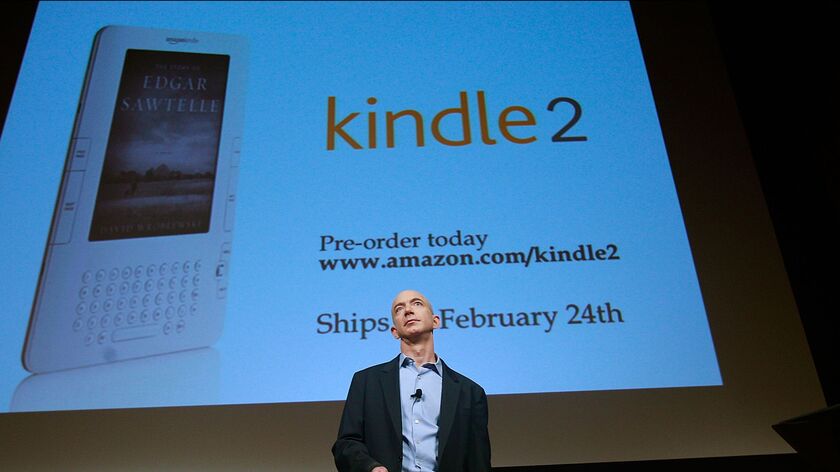
Amazon Is Testing Its Own Delivery Service to Rival FedEx and UPS

  • Online retailer would deliver from other merchants’ warehouses
  • Trial program underway on West Coast before national expansion

0:00 0:00
How Jeff Bezos Became the King of E-Commerce
x
How Jeff Bezos Became the King of E-Commerce
Amazon.com Inc. is experimenting with a new delivery service intended to make more products available for free two-day delivery and relieve overcrowding in its warehouses, according to two people familiar with the plan, which will push the online retailer deeper into functions handled by longtime partners United Parcel Service Inc. and FedEx Corp.
The service began two years ago in India, and Amazon has been slowly marketing it to U.S. merchants in preparation for a national expansion, said the people, who asked not to be identified because the U.S. pilot project is confidential. Amazon is calling the project Seller Flex, one person said. The service began on a trial basis this year in West Coast states with a broader rollout planned in 2018, the people said. Amazon declined to comment.
Amazon will oversee pickup of packages from warehouses of third-party merchants selling goods on Amazon.com and their delivery to customers’ homes, the people said -- work that is now often handled by UPS and FedEx. Amazon could still use these couriers for delivery, but the company will decide how a package is sent instead of leaving it up to the seller.
Handling more deliveries itself would give Amazon greater flexibility and control over the last mile to shoppers’ doorsteps, let it save money through volume discounts, and help avoid congestion in its own warehouses by keeping merchandise in the outside sellers’ own facilities.
FedEx shares fell 2.4 percent to $216 in early trading Thursday, while UPS dropped 2.2 percent to $116.4. FedEx didn’t immediately comment, and UPS didn’t immediately return calls and an email seeking comment.
Last year, Amazon introduced Seller Fulfilled Prime, which lets merchants who don’t stow items in Amazon warehouses still have their products listed with the Prime badge, meaning they’ll be delivered within two days. The merchants had to demonstrate they could meet Amazon’s delivery pledge, and many used UPS and FedEx for deliveries. The new service gives Amazon control over those deliveries instead, even if it continues to use third-party couriers.
Amazon has started looking beyond its own warehouse network to give shoppers quick access to an abundant assortment of goods. Its Fulfillment by Amazon offering already lets merchants ship goods to Amazon warehouses around the U.S., where they can be stored, packed and shipped to customers. That centralized approach can create logjams, particularly during the busy holiday shopping season.
Seller Flex would also give Seattle-based Amazon more visibility into the warehousing and delivery operations of its merchant partners, potentially helping it make full use of their product inventory, storage space and proximity to customers while still guaranteeing quick delivery.
The project underscores Amazon’s ambitions to expand its logistics operations and wean itself off the delivery networks of UPS and FedEx. A rush of last-minute holiday orders in 2013 forced Amazon to issue refunds to shoppers who didn’t get gifts in time, highlighting the perils of being overly dependent on partners for a main part of its business pledge -- quick, reliable delivery. Taking over some responsibility for delivery enables Amazon to protect that edge as rivals like Wal-Mart Stores Inc. enhance their own delivery operations.
Amazon is constantly experimenting to shorten delivery times and reduce costs. It built a network of "sortation centers" around the country, where packages are sorted by zip code and trucked to post offices, with the U.S. Postal Service handling the final mile of delivery since it already has workers bringing mail to every home in the country. It launched Amazon Flex, which uses independent contractors driving their own vehicles to deliver packages from Amazon shipping hubs, guided by a smartphone app. Prime Now offers a limited assortment of products, such as phone chargers and bottled water, in as little as an hour to shoppers in many cities.
Many online merchants who sell on Amazon’s marketplace pay fees to store products in the retail giant’s warehouses, letting Amazon gather and pack products when orders arrive. But the popularity of this service strains Amazon’s capacity during the end-of-year holidays. Online holiday spending in the U.S. will hit $129 billion this year, up 12 percent from a year ago, according to Forrester Research Inc.

Tuesday, October 3, 2017

E-COMMERCE REALITY FOR MANUFACTURERS

Omnichannel reality for consumer goods manufacturers and their slow actions to develop supply chains that drive e-commerce success.


SOME REALITY FOR 3PLs AND LOGISTICS PROVIDERS

How many 3PLs and logistics providers are like this at strategy, differentiation, and value proposition? More so in the Amazon Effect reality?


Saturday, September 30, 2017

3PLs AND E-COMMERCE--ASSESSMENT

3PLs and E-commerce--Assessment:
http://www.ltdmgmt.com/3pls-end-to-end-ecommerce.php


MANUFACTURER'S AND E-COMMERCE

Do manufacturers struggle with e-commerce because they do not understand Supply Chain Management's strategic role?  A change from what they are used to?


Thursday, September 28, 2017

BLOCKCHAIN, SUPPLY CHAINS, LOGISTICS

The futures of blockchain, logistics, and Supply Chain Management are tied together.