Friday, November 8, 2019

MARKS & SPENCER BLAMES ITS SUPPLY CHAIN

Marks & Spencer blames its #SupplyChain. Misdirection? Reflect failure of C-suite to invest in SCM? Trying to make its supply chain do more than it was designed for--how some mean "agile".

Marks & Spencer profits plunge as clothing sales continue to fall

Food halls return to growth as retailer cuts prices and introduces new ranges
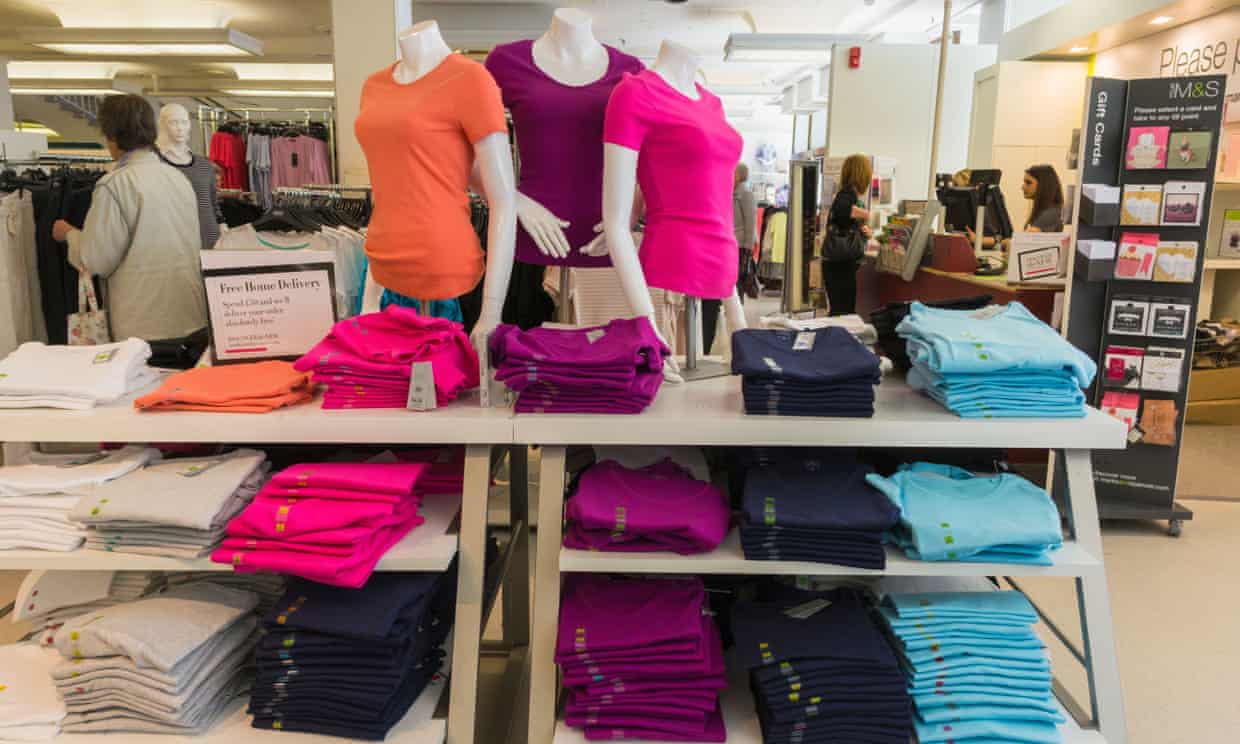
Marks & Spencer clothing display
Marks & Spencer has reported a fresh slump in clothing sales as poor levels of availability in its stores were compounded by an out-of-date supply chain.
The chief executive, Steve Rowe, blamed the 5.5% decline in like-for-like clothing sales on buying errors that meant popular sizes sold out too quickly. A new design team was shedding its womenswear’s reputation for “frumpiness”, it said, but progress was undermined by the 135-year-old company’s slow and complicated logistics, which meant it could not move products around the country fast enough. This setup contributed to a dire performance from its website, where sales were flat.
Rowe conceded the numbers for the first half of its financial year were “not pretty”. “Clothing is not where I wanted it to be,” he said. “We are about 18 months behind and racing to make up lost time. My No 1 priority is to get under the bonnet of the clothing business.”
He pointed to the stronger performance delivered by M&S’s food halls, where the results of its “transformation” programme were “beginning to show”. The food business returned to growth over the period, with like-for-like sales up 0.9% in the six months to 28 September, thanks to a programme of price cuts and new ranges.
Following almost two decades of attempts to revive the high street giant, Rowe and the retail veteran Archie Norman, who joined as chairman in 2017, are the latest management team to try to reinvent the retailer, which recently lost its place in the prestigious FTSE 100. Like Mothercare, which on Tuesday said it was closing down its loss-making UK chain, M&S is facing an existential crisis as it struggles to compete with cheaper rivals such as Primark and the rise of online shopping.
Jill McDonald was ousted as M&S clothing boss in the summer after buying mistakes ahead of a jeans promotion left it with empty rails for a month. While maintaining its crown as the UK’s largest clothing retailer, sales at the high street chain have now been falling for about eight year
Richard Lim, chief executive of consultancy firm Retail Economics, said M&S’s clothing ranges were “confused” and had been missing the mark season after season: “The race is on to fix its broken business model,” he said. “The sector is evolving at an unprecedented pace and some of the deep-rooted challenges in the business are proving extremely challenging to resolve.”
As part of its fightback plan, M&S is closing 120 full-line stores, which sell clothing and food under one roof. It has struck a deal with Ocado, which will result in the online grocer carrying products from M&S rather than Waitrose from next year.
The contrasting fortunes of the food and clothing divisions have led to speculation that M&S could break up. However, Norman – who made his name with the turnaround of Asda in the 1990s before selling it to Walmart – pointed out that most of the profit in both businesses was made in combined stores. “There are very strong sinews that join the businesses together that make the idea of taking the division too far today completely impractical,” he said.
In a bid to revitalise its clothing business, M&S will cull the size of its range to focus the chain’s massive buying power on a smaller number of potential blockbuster items. It is also changing the fit of its products in an attempt to attract younger customers. In menswear, for example, where shoppers complained that the clothes were “too old”, it has started to stock more slim and skinny-fit trousers.
The shares, which have lost a third of their value over the past year, finished flat at 182p on the update, which showed a 17% decline in pre-tax profits (before one-off items) to £176.5m on sales of £4.9bn. “There’s a lot to do, but I’d like to think that yes, we’ve seen a low point and the start of something different,” said Rowe, when asked if M&S had reached its nadir.
The company also pointed to a recent spike in fashion sales, with full-price and planned promotional sales up 2.7% in October on a year ago. “One swallow does not a summer make – I’ve certainly been here before – but I am encouraged by the reaction we have had,” said Rowe. He said that M&S was seeing dramatic sales uplifts when it managed to get the price, style and availability right – giving the example of jeans, where sales were up 34% in October compared with last year.

Thursday, November 7, 2019

BLOG: LOGISTICS, E-COMMERCE, AMAZON, LAST MILE, TRANSPORTATION. 1 OF A SERIES

With making supply chain management strategic and weaponized, the changes in supply chains are moving into logistics.  Much of what is happening involves Amazon.  For better control and improved end-to-end supply chain velocity, they are taking more involvement in their logistics.  More exactly, they are being parts of their logistics in-house--reverse outsourcing.

Their actions have included forwarding from China, leasing airplanes, having trucks, and starting actions with customer deliveries.  The latter is often referred to as the Last Mile.

Logistics service providers are concerned that Amazon may become a logistics service competitor.  This has value potential from a supply chain, not a logistics, view.  Being a "shipper", Amazon can sell that they better understand a customer's needs than does a logistics firm.  

There is an underlying issue with the ongoing disruption in the various logistics segments and the need to transform.  Do some providers no longer fit the needs of customers.  Do they need new business models.  And with that--are they resistant to change?

E-commerce and retail competitors have concerns.  What Amazon is doing is taking control of the logistics of its supply chain and improving the velocity--so important for the customer order delivery velocity.

As it stands, many e-commerce firms are concerned about the cost of Last Mile deliveries.  They are used to moving trailer loads of products to stores, not moving individual packages to individual customers.  Some of the concern is justified and some is misdirection which keeps these companies from making needed changes to their supply chains in order to compete in this new selling reality.

Amazon recently announced with grocery delivery.  They are making grocery delivery free--that Last Mile.  This compares to grocers that use outside logistics firms and some customers pay a fee.  It also contrasts with stores that have customer pickup their orders--click and collect--a less customer convenient option.   https://af.reuters.com/article/commoditiesNews/idAFL3N27D3TM?mod=djemlogistics_h

I will provide other observations on what is happening and will happen in logistics in country after country to support what is happening in the New Supply Chain. 

For more on the new logistics and its driver, the new supply chain and more read the white papers: www.ltdmgmt.com

BLOG: AMAZON E-COMMERCE. WHAT THEY ARE DOING, WHAT IT CAN MEAN, AND WHAT COMPETITORS SHOULD DO. 1 OF A SERIES

Amazon has redefined selling and retailing with its e-commerce order delivery velocity.  It is not enough to buy online, they set the bar for how quickly customers receive their orders.  They did this by make weaponizing and making supply chain management strategic.

They move inventory with speed through their end-to-end supply chain. That enables them to offer the Perfect Order--delivered complete, accurate, and on time.  This is the best company performance metric.  Bar none.

LTD will offer insights and observations on what Amazon is doing and/or what competitors are nto doing.

Amazon has built a network of distribution centers that are aligned to their customers.  These enable them to pick orders and deliver them quickly because they are close to customers.  The warehouses are large and use technology.  Here is a recent article on what Amazon is doing with robotics:
https://www.supplychaindive.com/news/amazon-invest-40m-robotics-hub/566736/

The challenge for retailers, manufacturers, and e-tailers who do not have the deep pockets to spend this kind of money is how to compete against it.  This can be done with the New Supply Chain--similar to what Amazon is doing--but with an emphasis on process, not this scale of technology.

I will provide other observations on the New Supply Chain that has elevated e-commerce to a global phenomenon.

For more on the new supply chain, its complexity, end-to-end velocity, and more read the white papers: www.ltdmgmt.com

Monday, November 4, 2019

IT IS ALL ABOUT INVENTORY VELOCITY

The retailers & manufacturers who have much inventory across their end-to-end supply chain. All kinds. Too much. Wrong product. Out of stock. In the wrong place. Gathering dust. Tying up capital. Waste. Where is the inventory velocity? Not this:


SUPPLY CHAIN MANAGEMENT / LOGISTICS BLOG: November 4

This blog is about supply chain management and logistics, especially the New Supply Chain Managemen with Amazon started and which has breathed fresh air into SCM.  


Disruption and transformation are occuring in retailing and manufacturing, driven by the new selling reality and the supply chain management that drives its success.  


This began with e-commerce which has swept across the world thanks to the new end-to-end supply chain management that is strategic and weaponized.  It is redefining selling/retailing with its customer convenience, customer expectations, and customer service.  All while being challenged as to costs--last mile, IMO 2020/ocean, warehouse, and more.

  
This supply chain management has perfect orders, extends the supply chain upstream, recognizes supply chain complexity, creates inventory velocity and order delivery speed, compresses time, and much more.

Transforming to the new SCM begins with supply chain assessment to know where you are.  Then it moves to where you are going and how to get there.

Logistics, because of what is happening with customers' supply chains and because of events internal to logistics, is also encountering disruption and change.  This ranges from technology--digitalization and its disintermediation, platform business, IoT, AR/VR/3D, drones, robotics, blockchain, and more.  Logistics role in the new end-to-end supply chain is being challenged and redefined.

For more, visit www.ltdmgmt.com

Here are some observations and comments on what is happening now
:
E-commerce is a global reality. Manufacturers face a challenge adapting to its underlying elevated lean requirements when so much lean potential is in the Supply Chain & outside the 4 walls.

E-commerce returns. Be nice to see comparative context too. As percent of shipments. Versus returns for in-store purchases. Breakdown as to product--thinking much of clothing related. And discussion of what AR/3D/VR at websites would do to reduce returns?
https://www.supplychaindive.com/news/ups-26-jump-returns-peak-season/566537/

Will carriers make IMO 2020 a non-negotiable, take-it-or-leave it subject? Do they have the fortitude? For contracts and spot market?

Retail. E-commerce. SupplyvChain investment. Article has answers with no understanding of the SCM to drive it. IMHO
https://www.cnbc.com/2019/11/01/retail-profits-to-take-a-hit-from-price-wars-and-investments-moodys-says.html

The retailers & manufacturers who have much inventory across their end-to-end supply chain. All kinds. Too much. Wrong product. Out of stock. In the wrong place. Gathering dust. Tying up capital. Waste. Where is the inventory velocity? 

Imagine a retail, manufacturing, omnichannel e-commerce that focused on inventory velocity & turns, not Last Mile. What would the company be like with more investment opportunity & the profit generation? That velocity is possible with the New Supply Chain.

Segments of 3D printing can be a game changer. 3D printing in warehouses and transport vehicles. Another elevation of end-to-end supply chain velocity & order delivery speed. Redefine manufacturing as part of Supply Chain Management. Make it about customers. Not factories.

Can we talk about the real issue—ocean transport and its failures to deliver reliable speed in the new reality of end to end supply chain velocity? Everything is relevant or not to that.

If your e-commerce is driven by your Last Mile provider, that is a sign your online program may be in trouble.

Does the chase for cheap transport/logistics rates contribute to the economic slowdown and eventually the real price of cheap? Aka, you get what you pay for.

Where supply chain management and logistics must go, all current job descriptions are out dated. Hire where you are going. Not where you are. Or better, do you know where you are going?

JC Penney.  Interesting approach to bring in customers. Debt & too much inventory. Are they emphasizing stores? Not e-commerce/omnichannel. Do they need Supply Chain transformation too? Like the stores, it may be outdated in the new reality. Without SCM update, are they really fixing things?
https://www.wsj.com/articles/j-c-penney-plots-a-comeback-less-clutter-more-yoga-classes-11572535484?shareToken=st70213600f5954c19b01b7a0c38409b4d

Economic reality hitting against selling reality of inventory speed and “Beam my order up, Scotty”. Trucking recession slams CH Robinson.
https://www.businessinsider.com/trucking-recession-ch-robinson-chrw-q3-earnings-2019-10

Amazon has breathed fresh air into Supply Chain Management. They made it strategic & weaponized. True differentiation that drives customer service, convenience, & expectations. No more homogenized, commoditized SCM. Hello Blue Ocean strategy. Retail. Manufacturing. CPG. FMCG.

Novel idea time. Last Mile providers. When retailers & manufacturers negotiate/beat you up for lower prices so they can compete with Amazon, suggest they set up their own service to compete with Amazon. Protect your margins.

The Order Delivery velocity of e-commerce vs the outdated business model of parcel and other Last Mile transport / logistics providers. Is not the real issue becoming--change or die? Learn the strategic, weaponized Supply Chain Management for starters.

Container lines with slow steaming & canceled sailings act against the required end-to-end Supply Chain velocity required for e-commerce order delivery success. Given CMA CGM’s core business, what will they really do here in integrated logistics?

It is difficult to claim best practices in #ecommerce logistics/ #SupplyChainManagement when we are in the early stages and there are few leaders & many laggards. Retail. Manufacturers. CPG. FMCG

Is this how some transport / logistics providers have transformed their business models to compete in the new end-to-end Supply Chain velocity reality?